Welcome To The Distelheim Gallery

My father passed away in 2018, just shy of his 100th birthday. By then, the gallery had been closed for years, but lived on in the memories of those who loved it,  and in the homes of dedicated collectors across the country. 

The building at 67 East Oak Street remained a small but significant landmark, part of the city’s artistic zeitgeist  By 2025, however, there were only a few remaining tenants. The architectural facade of Oak Street had shifted toward a uniformly upscale, glass-fronted aesthetic. 

And accordingly, the five-story relic of the building’s 20th century heyday was slated for demolition – another small piece of Chicago history erased.  in order to erect a building that would be consistent in style with the glitzy, glass-fronted buildings around it add period I can’t explain exactly The sense of loss I felt realizing that  67 East Oak Street as I knew it would soon be gone was profound, but I also knew the story could not end there. 

My father’s legacy was never meant to belong solely to the past. 


So I stepped forward to carry his vision into a new era with the creation of the Distelheim Gallery™, a reimagined, digital-platform that honors the heritage my father began on Oak Street. What once lived within brick and mortar now lives online, accessible, expansive, and able to reach audiences my father could never have imagined in the 1960s.

My father passed away in 2018, just shy of his 100th birthday. By then, the gallery had been closed for years, but lived on in the memories of those who loved it,  and in the homes of dedicated collectors across the country. 


The building at 67 East Oak Street remained a small but significant landmark, part of the city’s artistic zeitgeist  By 2025, however, there were only a few remaining tenants. The architectural facade of Oak Street had shifted toward a uniformly upscale, glass-fronted aesthetic. 

And accordingly, the five-story relic of the building’s 20th century heyday was slated for demolition – another small piece of Chicago history erased.  in order to erect a building that would be consistent in style with the glitzy, glass-fronted buildings around it add period I can’t explain exactly The sense of loss I felt realizing that  67 East Oak Street as I knew it would soon be gone was profound, but I also knew the story could not end there. 

My father’s legacy was never meant to belong solely to the past. 


So I stepped forward to carry his vision into a new era with the creation of the Distelheim Gallery™, a reimagined, digital-platform that honors the heritage my father began on Oak Street. What once lived within brick and mortar now lives online, accessible, expansive, and able to reach audiences my father could never have imagined in the 1960s.

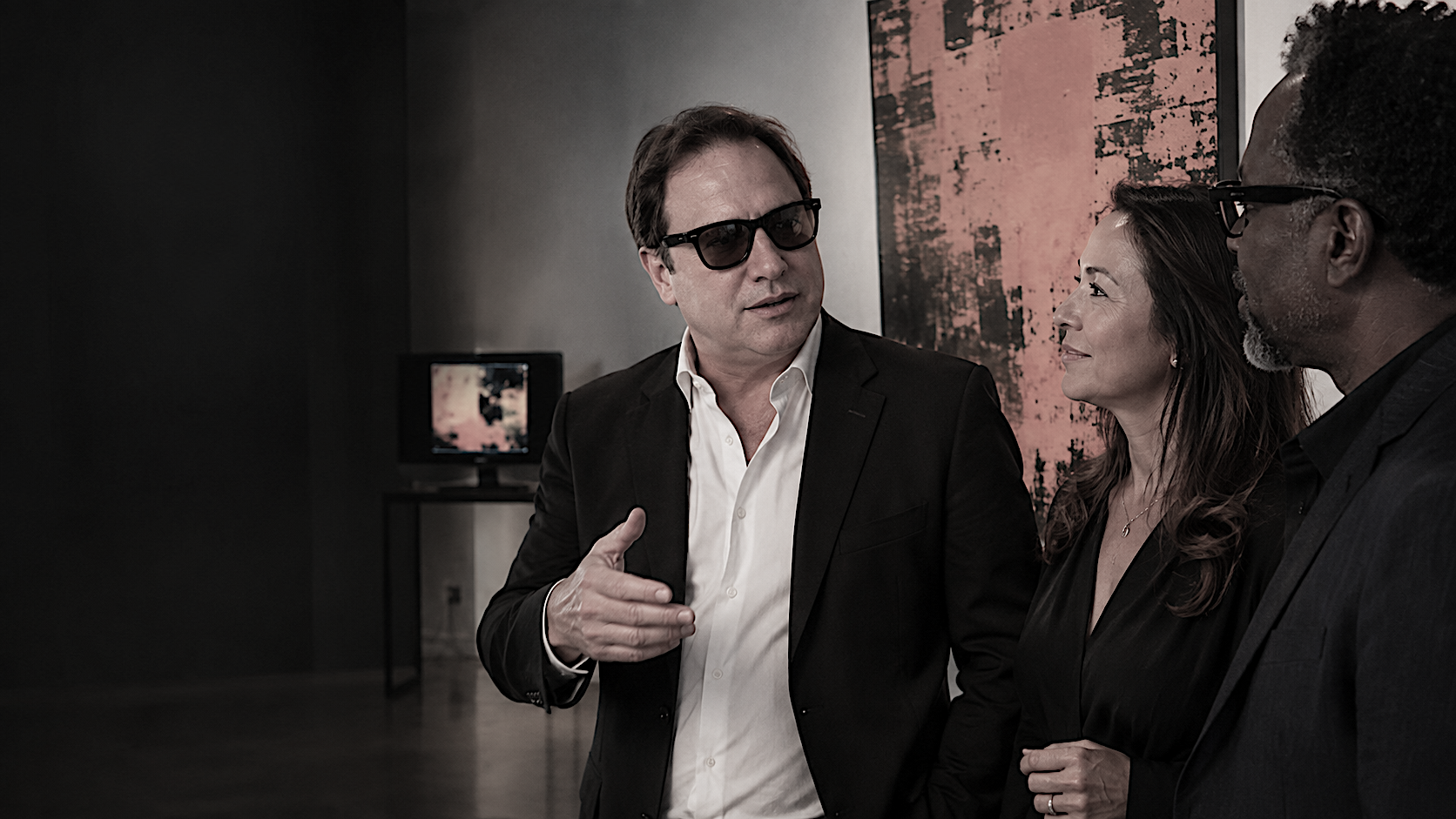
Today, the Distelheim Gallery features the work of multimedia artist and creative strategist Jefferey Cornett , my long time partner. The idea of preserving the soul of 67 East Oak Street emerged at the same time Jeff received a diagnosis of Stage IV prostate cancer, a moment that brought a new sense of clarity, urgency, and purpose to his own life. His current body of abstract work , dynamic, bold,  emotionally resonant, anchors the gallery’s debut.


My father believed that art should hold both beauty and emotional power. That belief guides us today. The Distelheim Gallery™ carries the heartbeat of his iconic gallery forward. The physical building may no longer stand, but the spirit of 67 East Oak Street remains very much alive.

And I am honored, truly honored, to carry it into the future.

We invite you to explore the archival timeline to learn more about Distelheim Galleries and how its legacy connects to The Distelheim Gallery. 

We’re so excited to share this new chapter with you.

The Distelheim Gallery™ is not just another art gallery.

It is the reawakening of a legacy that began on Oak Street in Chicago, a place where modern art found a home in the hands of Dr. Irving Distelheim, a visionary collector who believed art should be lived with, not just looked at.

Today, that vision is being carried forward by his daughter, Lisa Distelheim Barron, and her partner artist–and creative strategist Jefferey Cornett, who are bringing the gallery into the 21st century with a distinctly digital-first, collector-conscious approach.

Why We’re Different

Unlike many traditional galleries that function as exclusive gatekeepers, The Distelheim Gallery™ is designed to remove barriers between our artist and audience. We combine the warmth and intimacy of a legacy art space with the accessibility of a modern digital platform, allowing people to engage with art wherever they are.

Our collections,  such as the vibrant The Orange & Black Collection and the moody Blue Room Collection, are offered in multiple formats, from museum-quality originals and limited editions to beautifully boxed tabletop sets and wearable art. This layered approach invites everyone from first-time buyers to established collectors to participate at their own level of comfort and investment.

A Gallery That Meets You Where You Are

For new buyers, we provide approachable entry points that make collecting feel personal and exciting rather than intimidating. We offer storytelling, education, and transparent pricing that builds trust. Each piece comes with context the history, the inspiration, and the human story behind it turning an art purchase into an emotional investment rather than just a transaction.

For collectors, our model embraces rarity, provenance, and future value. Our editions are limited and intentional, preserving exclusivity while allowing collectors to diversify their acquisitions. We’re not interested in following trends we’re building enduring narratives that give collections weight, meaning, and appreciation over time.


Where Legacy and Innovation Intersect

The Distelheim Gallery™ honors its Oak Street roots by upholding the belief that art connects people but we pair that belief with new tools: storytelling, digital exhibitions, pop-up experiences, and partnerships that bring art into unexpected places. Our approach allows us to build a community, not just a client list.

This isn’t about art that sits quietly on a wall.

It’s about art that lives, breathes, travels, and inspires.

For Those Who See Art as More Than Decoration

Whether you’re discovering your first piece or adding to a carefully curated collection, The Distelheim Gallery™ offers a way to connect with art that is as human and dynamic as the work itself. It’s a gallery built for the curious, the passionate, and the visionary those who understand that collecting art is not just about owning objects.


As we look toward 2026 and beyond, with The Distelheim Gallery™ , we’re also, intentionally expanding its focus to center on abstract art in dialogue with modern art, reflecting both our legacy and the ever-evolving language of contemporary expression. Abstract art has deep roots in Chicago’s Oak Street Corridor, a quiet but powerful catalyst in shaping the city’s artistic identity. By embracing this tradition, we’re not just honoring the past of the original Distelheim Galleries, which championed modernism and cultivated collectors who lived with their art; we’re evolving it.  Abstract work allows for a universal, emotional resonance that transcends trends and borders, creating a natural bridge between heritage and innovation. This focus positions us to build a distinct, authentic brand—one that elevates abstraction as both a historical cornerstone and a living, breathing force for creative awareness, collector engagement, and cultural conversation in the years ahead.

View Two Of Our Collections For Early 2026 Beginning With Our Powerful, Dynamic Orange & Black Collection

Introducing the abstract art by gallery residential creative director, artist and partner, Jefferey Cornett.

“Revisiting Uncle Albert “transforms the iconic visage of Albert Einstein into a layered field of abstraction, wit, and intellectual play. Set against a textured ground that suggests the blackboard of a well-worn lecture hall, Cornett overlays bold strokes of orange, red, and violet—colors that conjure both the Ivy League palette and the restless curiosity of a mind forever questioning.

The reddishorange polka-dot matrix across Einstein’s face evokes equations, atoms, and playful disruption, suggesting that genius lives not in rigid lines but in joyful improvisation. Purple arcs and gestures dance across the surface, recalling chalk marks hastily sketched mid-thought, or musical notes scattered across a score—a reminder of Einstein’s own love for music and humor.

As part of the Orange and Black Collection, the work pays tribute to Princeton’s intellectual heritage while refusing solemnity. Instead, Cornett invites us to see Einstein not as the remote figure of textbooks, but as “Uncle Albert”—a playful companion whose brilliance was inseparable from wonder, laughter, and the art of seeing the world differently.

The Orange & Black Collection: Series Overview with Art Comparisons


The Orange & Black Collection by Jefferey Cornett situates itself at the crossroads of intellect, play, and legacy. By employing Princeton’s storied palette of orange and black, the works carry both the aesthetic gravitas of Ivy League tradition and the boldness of contemporary abstraction. Each piece functions as a meditation on identity, history, and cultural mythmaking—where color itself becomes both emblem and disruption

His “Revisiting Uncle Albert” ©2022 exemplifies this ethos. In transforming Einstein’s iconic visage into a field of layered abstraction, Cornett echoes Andy Warhol’s use of repetition and pop iconography, yet diverges by embedding wit and improvisation where Warhol leaned toward detachment. The red dot matrix across Einstein’s face recalls Roy Lichtenstein’s Ben-Day dots, but here they suggest both scientific notation and playful disorder—bridging mathematics and art.

The gestural purple sweeps and energetic arcs evoke the spontaneity of Jean-Michel Basquiat, who fused intellectual references (anatomy, mathematics, language) with raw visual rhythm. Like Basquiat, Cornett reminds us that intellect is not sterile, but alive with urgency and humor. The textured, weathered ground further nods to Gerhard Richter’s abstract works, where surfaces oscillate between precision and erosion—between what is revealed and what resists being fully seen.

What distinguishes Cornett’s approach is the fusion of legacy and personal narrative. Where Warhol, Lichtenstein, Basquiat, and Richter each interrogated cultural symbols, Cornett anchors his abstractions in lived experience—balancing Ivy League resonance, mathematical play, and personal storytelling. In this way, the Orange & Black Collection becomes both an homage and a challenge: a reminder that great minds, like great artworks, exist in the tension between rigor and whimsy.

Collector’s Note

Title: “Dear Uncle Albert”
Artist: Jefferey Cornett
Medium: Mixed Media on Canvas
Year: 2023

Provenance: This evocative mixed media artwork by Jeffrey Cornett is titled “Abyss of the Azure Gaze.” The piece is a profound exploration of human perception, rendered in a palette dominated by deep blues and soft grays. The focus of the composition is a pair of intense, vivid eyes that appear to emerge from a stormy sea of color and texture. The eyes, seemingly suspended in a fragmented and abstract background, draw the viewer into a direct and haunting gaze that suggests a deep emotional or existential inquiry. The artist’s use of blurred and softened edges alongside more defined details around the eyes creates a dynamic contrast, enhancing the feeling of depth and introspection. This work invites viewers to contemplate the windows of the soul, enveloped in the mysteries of human emotions and the subconscious.

Comparisons To Other Artists

For The Ghost in the Pickup, both the musical subject matter and the expressive abstraction open rich opportunities for comparison, collector positioning, and valuation—especially when framed within Jefferey Cornett’s multifaceted career as a musician, artist, and storyteller.

Jean-Michel Basquiat – Similarities: Cultural reverence for music, rhythmic brushwork, emotional urgency. Difference: Cornett’s piece is more polished and less chaotic in structure, evoking memory and tone rather than coded language.

David Salle- Similarities: Layered visual vocabulary, references to American pop culture, fine art meets music. Difference: Cornett’s work leans more emotively abstract; Salle often juxtaposes with irony.

Robert Rauschenberg (late period) Similarities: Fusion of Americana, texture, and sound. Difference: Cornett’s visual style is more painterly and fluid, with fewer hard-edge constructs.

Mark Rothko (emotive fields of color) Similarities: Emotional layering, spiritual undertones through abstraction. Difference: Rothko’s color fields are meditative; Cornett’s abstraction is more narrative-driven.

Grace Hartigan / Richard Diebenkorn. Similarities: Fluid abstraction with identifiable forms, color-drenched brushwork that rides the line between emotion and figuration. Difference: Cornett leans toward metaphor and story over formalism.


Suggested Valuation & Pricing

This piece, as a limited edition, lends itself to both fine art and music-collector interest. Pricing accounts for:

  • Cornett’s unique crossover credibility as both artist and seasoned musician

  • Emotional and collectible appeal for music lovers (particularly guitar culture)

  • Gallery-level finishing, narrative depth, and signed provenance

Artwork Name


Format

Suggested Retail Price (USD)

Large Format Original Mixed Media (24×36″ – 96”×48″ or larger)

$6,000 – $12,000

High End Limited Edition Print (Signed, Numbered, Ed. of 25)

$1,000 – $1,600

Giclée Print (Open Edition, Unsigned)

$275 – $475

Boxed Limited Edition Signed Tabletop Version

$225 – $350

Signed Limited Edition Note Card Set (Box of 10)

$45 – $55

Limited Edition Wearables (Art Scarves, Tees, Totes)

$85 – $195

Collector Set (Print + Poem/Voice Memoir)

$1,600 – $2,800

NFT + Physical Hybrid (1/1 or 3/3 Series)

$2,500 – $5,200

IP License

TBD


Applicable taxes, fees, shipping, insurance, handling costs are not included


Collector’s Note

Title: Patina Over Orange
Artist: Jefferey Cornett
Medium: Mixed Media on Canvas
Year: 2023
Collection: The Orange & Black Collection

Provenance:

Patina Over Orange emerges from Jefferey Cornett’s highly regarded Orange & Black Collection, a series that explores the emotional architecture of contrast, minimal form, and layered surface treatment. In this work, a constellation of black circular forms floats with calculated rhythm over a field of orange, rust, and neutral tones. The background is built through scraped textures, translucent washes, and painterly layers, creating a patina that feels both intentional and time-worn, evoking the subtle aging of surfaces that hold stories.

The black circles act as visual anchors—pure, modernist elements—set against an organic ground that suggests history, memory, and movement beneath the surface. This dynamic interplay between the controlled and the organic is at the core of Cornett’s practice, making the work both visually bold and emotionally resonant.

Collector Insight

Cornett’s work is distinguished by its graphic clarity, tactile surfaces, and modernist restraint—a language that sits at the intersection of post-war abstraction and contemporary minimalism. Where many abstract works lean heavily on chaos or pure color field, Cornett balances geometric precision with textural depth, offering collectors pieces that are both immediate and enduring.

Patina Over Orange is particularly striking for its architectural simplicity layered atop painterly complexity, allowing it to exist comfortably in both contemporary interiors and fine art collections. This quality makes it attractive not just to experienced collectors but also to first-time buyers seeking an entry point into high-quality contemporary abstraction.

Comparisons To Other Artists

Jefferey Cornett’s work aligns conceptually with artists such as:

Yayoi Kusama — in the repetition of form and the power of the circle as motif.

Ellsworth Kelly — in his bold use of shape, flat black, and crisp visual language.

Bridget Riley — in his rhythmic play between geometry and movement.

Mark Rothko (in emotional underlayers) — in the luminous, layered grounds that hold quiet emotional weight beneath minimalist surface gestures.

Unlike purely conceptual minimalism, Cornett integrates emotional texture and surface depth into his formal compositions, giving the work a distinctive sense of narrative beneath structure.


Edition & Valuation

Original Mixed Media on Canvas — 1 of 1 (available)

Limited Edition Fine Art Prints: 100 (archival pigment, signed and numbered)

Limited Edition Boxed Tabletop Sets: 5000

Wearable Series (Silk Scarves / Apparel): 1500

TBD Merchandise: $25–$500

NFT (Digital Edition): 1 — Market valuation to be set at launch

Estimated Market Range:

Original: $8,500 – $12,500 (based on comparable emerging-to-mid tier contemporary abstraction sales in U.S. galleries).

Editions & Wearables: $75 – $1,500 (reflecting growing interest in collectible hybrid art formats).

Cornett’s works are positioned within the emerging-to-blue-chip bridge market, appealing to interior designers, institutional buyers, and modern collectors who value both narrative and clean modern aesthetics. This market strategy mirrors the early trajectories of artists who began with limited edition prints and wearable collaborations before achieving broader gallery representation.

Collector’s Note

Title: Orange Eclipse
Artist: Jefferey Cornett
Medium: Mixed Media on Canvas
Year: 2023
Collection: The Orange & Black Collection

Provenance: Orange Eclipse stands as a bold and poetic statement within Jefferey Cornett’s Orange & Black Collection. The composition centers on a large, weighty black form encircled by two luminous, fluid orange bands that echo the natural movement of an eclipse—where light meets shadow in quiet, powerful tension.

The work’s smooth geometry and uninterrupted color fields are balanced by the subtle imperfections in the hand-drawn contours, giving the piece a human pulse beneath its modernist clarity. This duality—precise and organic, light and dark—is at the heart of Cornett’s practice, inviting viewers into an emotional space of suspended stillness.

Collector Insight

Orange Eclipse embodies a timeless visual language that bridges the stark clarity of minimalism with the symbolic resonance of celestial phenomena. The gently elliptical form suggests both containment and openness, creating a visual experience that shifts with the viewer’s distance and light.

Its simplicity is deceptive—it rewards quiet looking. This makes it especially compelling to collectors who appreciate works that elevate architectural spaces while holding deeper metaphorical meaning. The orange band, vivid yet controlled, frames the black core like a halo of potential energy—a restrained explosion frozen in time.

Comparisons To Other Artists

Cornett’s graphic minimalism draws on a lineage of 20th-century modern abstraction while asserting its own distinctive voice. Orange Eclipse resonates with:

Ellsworth Kelly — for the purity of form and deliberate shape.

Frank Stella — in its graphic clarity and bold, unmodulated color fields.

Kazimir Malevich’s Suprematism — in its deep engagement with essential geometry.

Richard Serra — for the monumental weight of the central black shape, even on a flat surface.

What sets Cornett apart is his emotive restraint—his ability to deliver powerful visual impact while preserving an undercurrent of human warmth. His Orange & Black Collection positions him uniquely within a growing contemporary market that values elevated simplicity and timeless design.


Suggested Valuation & Pricing

Edition & Valuation

Original Mixed Media on Canvas: 1 of 1 (available)

Limited Edition Fine Art Prints: 100 (archival pigment, signed and numbered)

Limited Edition Boxed Tabletop Sets: 5000

Wearable Series (Silk Scarves / Apparel): 1500

TBD Merchandise: $25–$500

NFT (Digital Edition): 1 — Market valuation to be set at launch

Estimated Market Range:

Original: $9,000 – $13,500 (based on early sales trends in the contemporary abstract minimalism segment).

Editions & Wearables: $75 – $1,500.

This valuation reflects Cornett’s growing reputation in digital-first and legacy art markets, where collectors value works that combine strong visual signatures with accessible editions.

Collector’s Note

Title: The Bloom Uprising
Artist: Jefferey Cornett
Medium: Mixed Media on Canvas
Year: 2022
Collection: The Orange & Black Collection

Provenance:

The Bloom Uprising is a radiant and emotionally charged work from Jefferey Cornett’s celebrated Orange & Black Collection. A field of vivid orange poppy-like blooms bursts forward against a bold orange background, their dark, graphic stems cascading in flowing black lines. The composition is both organic and disciplined—each bloom rendered with delicate, painterly gestures, layered over a sharply defined structural base.

The work embodies Cornett’s signature language: the tension between fluidity and form, emotion and architecture, nature and design. The blooms, radiant and alive, push upward as though in defiance, while the black stems below create a grounded, rhythmic structure. This interplay of movement and stillness gives the piece a sense of uprising—a collective voice rising from the ground up.

Collector Insight

This piece stands apart in Cornett’s oeuvre for its vibrant sense of optimism and defiant joy. While many works in the Orange & Black Collection explore restraint and contrast, The Bloom Uprising celebrates emergence—an act of rising above and breaking through.

The floral forms appear almost illuminated against their orange ground, inviting viewers to experience both the fragility and strength of collective beauty. It’s a work that resonates powerfully in modern interiors, balancing organic expression with bold graphic weight.

Comparisons To Other Artists

Cornett’s visual language here aligns with:

Andy Warhol’s floral series — in its repetition, pop energy, and confident color.

Ellsworth Kelly — for its clean silhouettes and modernist compositional balance.

Georgia O’Keeffe — for its close, almost intimate treatment of blooms as both symbol and form.

Yayoi Kusama — in the layering of visual rhythm and intensity.

Where Cornett differs is in his interplay of emotional gesture with bold structure—the flowers are not passive; they rise.

Suggested Valuation & Pricing

Edition & Valuation

Original Mixed Media on Canvas: 1 of 1 (archival)

Limited Edition Fine Art Prints: 100 (archival pigment, signed and numbered)

Limited Edition Boxed Tabletop Sets: 5000

Wearable Series (Silk Scarves / Apparel): 1500

TBD Merchandise: $25–$500

NFT (Digital Edition): 1 — Market valuation to be determined at launch

Estimated Market Range:

Original: $8,000 – $12,000

Editions & Wearables: $75 – $1,500

This valuation is supported by a growing collector base for Cornett’s works, particularly in modern minimalism with emotive visual signatures, similar to early collector movements around Warhol floral prints and Kelly shapes.

Why The Orange and Black Collection Is One Of The Key Focuses For The Distelheim Gallery™

The combination of orange and black in art has been used by artists since the early 19th century to evoke intense contrasts, symbolism, and emotional resonance. This pairing is powerful for several reasons, and its value extends beyond mere aesthetics..

Symbolic and Psychological Significance

  • Orange: Represents energy, enthusiasm, warmth, and change. It can also symbolize fire, creativity, and emotional intensity. In Western art, it evokes autumn and harvest, signaling transition and decay.

  • Black: Suggests power, mystery, fear, and elegance. It often serves as a symbol of the unknown, death, or solemnity.
    Together, these two colors create a striking visual tension, evoking both excitement and darkness.

Historical Use in Art and Design (1800s – Present)

During the 19th century, Romanticism and the Symbolist movement began exploring emotional extremes. Artists experimented with these contrasting colors to heighten the emotional weight of their work. Some examples include:

  • J.M.W. Turner: His paintings of atmospheric landscapes and fires, like The Burning of the Houses of Lords and Commons, make heavy use of glowing oranges surrounded by dark shadows, capturing movement and intensity.
  • Japanese Ukiyo-e Prints: 19th-century Japanese artists such as Katsushika Hokusai employed bold contrasts with black outlines and bright colors like orange, influencing Western artists and contributing to the development of movements like Art Nouveau and Impressionism.


Orange and Black in Modern Art (Post-1800s Influence)

By the 20th century, Abstract Expressionists, including artists like Mark Rothko, used orange and black to explore mood, depth, and spatial ambiguity. Rothko’s works often juxtaposed warm and dark tones to evoke meditative or oppressive feelings. Other modern artists embraced these colors in diverse contexts:

  • Halloween and Gothic Influence: In design, orange and black became symbols of Halloween, invoking fear, celebration, and mystery.

  • Pop Art and Urban Art: Bright orange juxtaposed with black gives compositions a sense of modernity and rebellion. Artists like Jean-Michel Basquiat used such contrasts to convey both vitality and struggle.


Impact and Value in Contemporary Art

Artists today continue to employ orange and black to challenge conventions. These colors remain valuable due to:

  • Emotional Weight: Works using these colors generate powerful emotional reactions, whether conveying joy or fear.

  • Cultural Resonance: Orange and black are associated with specific cultural moments (like autumn or Halloween), giving the artwork contextual layers.

  • Visual Contrast and Depth: The brightness of orange against black creates a stark visual tension, focusing the viewer’s attention and creating a sense of movement or spatial depth.

The power of orange and black lies in their ability to evoke opposing emotions—joy and melancholy, energy and darkness—while maintaining cultural and symbolic relevance. Throughout art history, these colors have allowed artists to explore extremes, both psychological and visual, making their works timelessly evocative.

More Orange & Black Portfolio

“Orange Eclipse,” each available in various formats, from large-scale artworks to personal note card sets. The collection aims to evoke a wide range of emotions and themes, encompassing power, beauty, and romance. Click here to learn more.

One of the gallery’s standout features is The Orange & Black Collection™, which delves into the dynamic interplay between these contrasting colors. This collection includes pieces like “Resonance Disrupted,” “Patina Over Orange,” and many more all available in note card sets as well. Click here to learn more.

The online gallery’s commitment to fostering a deep connection between art and its audience is evident in its thoughtfully assembled collections designed to educate, inspire, and evoke curiosity. This ethos is woven into the fabric of their exhibits, showcasing works that transport viewers to distant realms, both external and internal.

THE ORANGE & BLACK COLLECTION™

“Tangerine Whorl” is an abstract expressionist piece that features a bold, black circular shape on a textured tangerine orange background. The black shape is not a perfect circle but more of an organic loop, giving the impression of motion, as if it were a brushstroke captured mid-swirl.

Click Here To Shop The Orange and Black Collection

THE ORANGE & BLACK COLLECTION™

“Resonance Disrupted” is a striking abstract piece that utilizes a bold contrast of black against a fiery orange background. The artwork features a series of dense black horizontal bars that are evenly spaced and stretch across the width of the canvas.

Click Here To Shop The Orange and Black Collection


THE ORANGE & BLACK COLLECTION™

“Patina Over Orange” is an intriguing table top or bookshelf-sized limited edition artwork forming part of The Orange & Black Collection. It presents a vibrant composition of black dots overlaying a textured, orange-hued backdrop that suggests a weathered yet energetic patina effect.

Click Here To Shop The Orange and Black Collection

THE ORANGE & BLACK COLLECTION™

“Coded Rhythms” consists of two vertical columns of horizontal black brush strokes on a vibrant orange background. The strokes vary slightly in length and thickness, which suggests they may have been hand-painted or drawn, providing a textured, organic feel. The uniformity of the lines and their arrangement into two columns give the work a rhythmic and structured appearance, reminiscent of a musical score or barcode patterns.

Click Here To Shop The Orange and Black Collection

THE ORANGE & BLACK COLLECTION™

THE ORANGE & BLACK COLLECTION™

“Patina Over Orange” is an intriguing table top or bookshelf-sized limited edition artwork forming part of The Orange & Black Collection. It presents a vibrant composition of black dots overlaying a textured, orange-hued backdrop that suggests a weathered yet energetic patina effect.

Click Here To Shop The Orange and Black Collection

Maximizing The Minimal Look For The Love Of Just Being One With Art

This artwork below from The Distelheim Gallery’s Orange and Black Collection features a bold, textured diptych-like composition. The piece is divided vertically: the left side a sun-baked ochre yellow, the right a vibrant burnt orange. Both sections are heavily impastoed—thick with ridges and ridged textures—evoking an earthy, visceral quality. The background is a soft, icy blue-gray that frames the vibrant colors and enhances their intensity through contrast.

The emotional tone is both warm and contemplative—a dialogue between light and heat, memory and energy. This work is titled:“Thresholds of Fire and Field”—a name that nods to both its color palette and the symbolic interplay between nature, transformation, and internal space.

Setting Description: The setting is a modern, cozy, and minimalistic living space with a warm ochre-yellow wall that harmonizes beautifully with the painting’s palette. A light wood side table holds stacked books and a slender vase with yellow blooms, subtly echoing the hues in the artwork. The mid-century modern armchair in a matching yellow upholstery anchors the room, accented with a black-and-white checkered pillow and a soft beige throw. A floor lamp with a wooden tripod base and white shade stands next to it, adding vertical balance.

Overhead, a black wire-frame pendant light adds a sculptural element, and a small wooden book holder on the floor softens the composition further with practical charm.

Artistic and Curatorial Notes: This curated vignette reflects the artist’s exploration of color field abstraction and the emotional architecture of hue. The room honors the painting’s material presence—a tactile memory space—by matching its elemental warmth with grounded, natural furnishings. It’s a dialogue between art and environment, designed to let the work breathe while subtly extending its emotional range into lived space.

The Orange and Black color scheme of Princeton University carries a distinct historical and cultural significance, both in the university’s traditions and its influence on art, design, and broader cultural identity. Go Tigers !

Also For  2026 Please View Our Unique, Expressive And Equally As Powerful Blue Room Collection

Coming To The Distelheim Gallery™ In 2026: Private Blue Room Collection For Gallery Members

The Blue Room Collection™ is a curated journey through emotional intensity, psychic landscapes, and the quiet force of reflection—all expressed through the evocative power of blue.

Anchored by Jefferey Cornett’s striking and immersive portraiture, this collection invites viewers into an intimate dialogue with color, memory, and meaning.

Blue here is more than pigment—it is presence. It haunts and heals, veils and reveals. In Cornett’s centerpiece work, the viewer is met by an electric gaze—eyes alive with wisdom, sorrow, and unspoken truths. Saturated in indigo, sapphire, and icy ultramarine, his piece serves as a mirror to the interior life. The eyes do not merely observe—they implore.”

    Through texture and layered technique, Cornett renders blue as distortion and divinity, memory and mourning.

    Each piece in The Blue Room Collection™ echoes this emotional terrain. Whether abstract, figurative, or conceptual, the artworks use the blue spectrum as a language of contemplation, transformation, and timeless witness.

    For The Distelheim Gallery™, long celebrated for showcasing work with emotional depth and societal resonance, The Blue Room Collection™ stands as a meditation on color’s ability to convey the inexpressible. Here, blue is not cold—it is alive, soulful, and, above all, human.

      Collector’s Note

      Title: “Abyss of the Azure Gaze”
      Artist: Jefferey Cornett
      Medium: Mixed Media on Canvas
      Year: 2023

      Provenance: This evocative mixed media artwork by Jeffrey Cornett is titled “Abyss of the Azure Gaze.” The piece is a profound exploration of human perception, rendered in a palette dominated by deep blues and soft grays. The focus of the composition is a pair of intense, vivid eyes that appear to emerge from a stormy sea of color and texture. The eyes, seemingly suspended in a fragmented and abstract background, draw the viewer into a direct and haunting gaze that suggests a deep emotional or existential inquiry. The artist’s use of blurred and softened edges alongside more defined details around the eyes creates a dynamic contrast, enhancing the feeling of depth and introspection. This work invites viewers to contemplate the windows of the soul, enveloped in the mysteries of human emotions and the subconscious.

      Comparisons To Other Artists

      For The Ghost in the Pickup, both the musical subject matter and the expressive abstraction open rich opportunities for comparison, collector positioning, and valuation—especially when framed within Jefferey Cornett’s multifaceted career as a musician, artist, and storyteller.

      Jean-Michel Basquiat – Similarities: Cultural reverence for music, rhythmic brushwork, emotional urgency. Difference: Cornett’s piece is more polished and less chaotic in structure, evoking memory and tone rather than coded language.

      David Salle- Similarities: Layered visual vocabulary, references to American pop culture, fine art meets music. Difference: Cornett’s work leans more emotively abstract; Salle often juxtaposes with irony.

      Robert Rauschenberg (late period) Similarities: Fusion of Americana, texture, and sound. Difference: Cornett’s visual style is more painterly and fluid, with fewer hard-edge constructs.

      Mark Rothko (emotive fields of color) Similarities: Emotional layering, spiritual undertones through abstraction. Difference: Rothko’s color fields are meditative; Cornett’s abstraction is more narrative-driven.

      Grace Hartigan / Richard Diebenkorn. Similarities: Fluid abstraction with identifiable forms, color-drenched brushwork that rides the line between emotion and figuration. Difference: Cornett leans toward metaphor and story over formalism.


      Suggested Valuation & Pricing

      This piece, as a limited edition, lends itself to both fine art and music-collector interest. Pricing accounts for:

      • Cornett’s unique crossover credibility as both artist and seasoned musician

      • Emotional and collectible appeal for music lovers (particularly guitar culture)

      • Gallery-level finishing, narrative depth, and signed provenance

      Artwork Name


      Format

      Suggested Retail Price (USD)

      Large Format Original Mixed Media (24×36″ – 96”×48″ or larger)

      $6,000 – $12,000

      High End Limited Edition Print (Signed, Numbered, Ed. of 25)

      $1,000 – $1,600

      Giclée Print (Open Edition, Unsigned)

      $275 – $475

      Boxed Limited Edition Signed Tabletop Version

      $225 – $350

      Signed Limited Edition Note Card Set (Box of 10)

      $45 – $55

      Limited Edition Wearables (Art Scarves, Tees, Totes)

      $85 – $195

      Collector Set (Print + Poem/Voice Memoir)

      $1,600 – $2,800

      NFT + Physical Hybrid (1/1 or 3/3 Series)

      $2,500 – $5,200

      IP License

      TBD


      Applicable taxes, fees, shipping, insurance, handling costs are not included


      Collector’s Note

      Title: Blue Was the Word”

      Artist: Jefferey Cornett
      Medium: Digital Mixed Media on Canvas
      Year: 2023

      “Provenance:

      In Blue Was the Word” , Jefferey Cornett crafts a portrait steeped in atmosphere—an intimate close-up of a young woman’s lips, rendered in shades of midnight and storm-washed blue. The image is both tactile and elusive, its surface flecked with textures that recall rain on glass, city grit, and the ghosted marks of time. The darkness gathers around her face like the hum of New York after midnight, when the streets hold secrets and the skyline feels like a witness.

      Her mouth is drawn with nervous, electric lines—alive with unspoken words, unexpressed confessions, and the kind of ache that lingers in the chest long after the moment has passed. She is a woman who knows desire but keeps love at arm’s length, unable to align her heart with the one man she wishes to give it to. In the shadowed blue that envelops her, lust burns, but love is deferred—suspended in the heavy quiet between wanting and surrender. She’s lost. 

      Cornett’s controlled minimalism in composition heightens the emotional charge, allowing viewers to sense the city outside the frame and the internal storm within her. Blue Was the Word” is at once a character study and a confession—about intimacy withheld, and the cost of a heart that cannot open.

      Blue Was the Word” a portrait of urban solitude, where want is fluent and love remains untranslated. It is the elegy of a romance undone by hesitation, written in the cool grammar of blue for a soul that is always lost.

      Comparisons To Other Artists

      This piece sits in a crosscurrent of emotive minimalism, figurative abstraction, and psychological surrealism.

      Jenny Saville (detail studies) Similarities: Hyper-focused body fragments, especially faces, done in expressive, abstract strokes. Difference: Saville uses more physical paint and flesh tones; Cornett leans toward digital and emotional palette.

      Chuck Close (early soft-focus period) Similarities: Extreme close-up, deconstructed portraiture, fragmentation of identity. Difference: Close’s work is grid-based; Cornett’s is intuitive, atmospheric, and layered.

      Francis Bacon (face abstraction) Similarities: Psychological undercurrent, fragmented facial structure, dreamlike disquiet. Difference: Bacon distorts violently; Cornett distills emotionally.

      Gerhard Richter (blurred photorealism) Similarities: Aesthetic of memory and haze; soft-edge figuration. Difference: Richter uses literal blur; Cornett uses texture and color abstraction to convey emotion.

      Bill Viola (video stills of human expression) Similarities: Meditative, single-focus human moments—often through tears, silence, or tension. Difference: Viola’s medium is video; Cornett achieves similar resonance through stillness and texture.

      Suggested Valuation & Pricing

      Blue Was the Word” captures the quiet grief and strength hidden within the human gaze. In this minimalist portrait fragment, Cornett invites us into a space between thought and feeling, memory and identity. It’s a whisper of truth, wrapped in silence.”

      This work has strong crossover appeal for both fine art collectors and emotionally driven buyers. It could easily be positioned as a signature emotional abstract within a gallery or digital exhibition.

      Format Suggested Retail Price (USD)
      Original Mixed Media on Canvas (36×36″) $7,500 – $11,000
      Limited Edition Print (Signed, Ed. of 25) $1,100 – $1,600
      Giclée Print (Open Edition, Unsigned) $325 – $475
      Collector’s Box Set (Art + Poem + QR Video) $1,750 – $3,000
      NFT + Physical Hybrid (1/1 or 3/3 Edition) $2,800 – $5,200
      Collector’s Note

      Title: Blue Was the Word”

      Artist: Jefferey Cornett
      Medium: Digital Mixed Media on Canvas
      Year: 2023

      “What the Eyes Remember” is not just a portrait, it’s an act of recall. The artist layers gesture, memory, and unresolved expression into a sparse, aching composition. In the overlapping faces, we see the artist’s lived history, the selves he’s known, the people he’s lost, and the quiet watchfulness of someone who has endured.”

      Collector’s Note
      Title: “What The Eyes Remember” 
      Artist:
      Jefferey Cornett
      Medium:
      Digital Mixed Media on Paper
      Year:
      2024

      Provenance:

      “What The Eyes Remember” ©2024 is a hauntingly introspective piece that merges portraiture, memory, and the emotional residue of presence. In this layered sketch, Jefferey Cornett weaves two visages—one masculine, bold, and front-facing, the other softer, perhaps feminine or childlike, turned inward and downward—into a single fluid field of cerulean and sapphire. The interplay between the two evokes not a conversation, but a memory reverberating back through time and consciousness.

      The heavier linework defining the man’s eyes, nose, and mustache grounds the viewer in a raw, confrontational gaze—direct, tired, knowing. Yet behind and beside this is a shadow, more sketch than figure, as if she—or a younger self—lingers only in the space of reflection. The monochromatic blue wash softens the intensity, suggesting water, distance, or even the ether of thought. It is a portrait of dualities: strength and sorrow, memory and immediacy, voice and echo.

      The artist’s signature touch, sparse but intentional, rough yet precise, reminds us that some truths are drawn not in ink, but in what’s left unsaid. “What The Eyes Remember”  stands as both a personal mirror and a universal meditation on how those we’ve lost, loved, or left remain stitched into our very contours.

      Comparisons To Other Artists

      This work draws upon traditions in gestural portraiture, emotional mapping, and figurative abstraction, evoking a lineage of psychologically loaded portrait artists.

      Egon Schiele Similarities: Scratchy, emotionally raw line work; minimal detail with maximal tension. Difference: Schiele is more angular and erotic; Cornett is more nostalgic and layered in tone.

      Cy Twombly Similarities: Scribbled marks, automatic gesture, poetic chaos. Difference: Twombly often avoids figuration; Cornett reveals identity through it.

      Jean Cocteau (illustrative style) Similarities: Sparse line drawings that suggest psychological depth, often blending multiple profiles or meanings. Difference: Cocteau was cleaner and more classical; Cornett’s hand is heavier with emotional grit.

      Tracey Emin (drawing works) Similarities: Autobiographical intensity, emotional vulnerability, layered simplicity. Difference: Emin’s narratives are more literal or sexual; Cornett’s are introspective and observational

      David Hockney (iPad and digital sketch period) Similarities: Embrace of digital tools to explore portraiture and memory. Difference: Hockney remains more formal; Cornett’s use of texture and distortion feels rawer and more emotionally unresolved.

        Suggested Valuation & Pricing

        Given its intimacy, emotional detail, and collectibility within a potential portrait or legacy series, this piece supports a wide range of high-value collector formats.

        Format Suggested Retail Price (USD)
        Original Print on Archival Canvas (24×36″) $6,000 – $9,000
        Limited Edition Print (Signed, Ed. of 25) $1,000 – $1,450
        Giclée Print (Open Edition) $275 – $450
        Collector Set (Art + Short Story or Memoir Excerpt) $1,600 – $2,800
        NFT + Physical Hybrid (3/3 Series) $2,500 – $4,800

        Ideal Audiences

        • Collectors interested in emotional portraiture or art of introspection

        • Literary/art crossover buyers (especially if paired with memoir excerpts)

        • Psychologists or mental health collectors (as a visual meditation on identity)

        • Museum collections on aging, legacy, or male vulnerability

        • Family office collections seeking modern heirloom storytelling

        Collector’s Note

        Title: The Ghost in the Pickup
        Artist: Jefferey Cornett
        Medium: Mixed Media on Canvas 
        Year: 2023

        Description:

        The Ghost in the Pickup is a dynamic abstract tribute to the electric guitar—not just as an instrument, but as a conduit of memory, rebellion, and soul. Cornett’s brushstrokes are visceral and improvisational, much like a blues solo unraveling across the strings of a Stratocaster. At the center, an abstracted guitar body emerges in spectral whites and blues, anchored by darkened pickups that seem to hum with energy and history.

        The textured chaos of the background—rich in indigo, ultramarine, and violet—suggests not just motion but emotional charge. This is not a static image of a guitar; it’s the echo of a life lived in sound. The work balances technical composition with emotional improvisation, capturing the artist’s lifelong connection to music, performance, and creative defiance.

        Music-Art Crossover Context: This piece fits into the lineage of fine art tributes to music—echoing the spirit of Andy Warhol’s work with The Velvet Underground, or even Chuck Close’s portraits of composers, but abstracted to reflect not the subject’s image, but its soul.

        For The Ghost in the Pickup, both the musical subject matter and the expressive abstraction open rich opportunities for comparison, collector positioning, and valuation—especially when framed within Jefferey Cornett’s multifaceted career as a musician, artist, and storyteller.

        Artist Comparisons (Stylistic + Thematic)

        Jean-Michel Basquiat – Similarities: Cultural reverence for music, rhythmic brushwork, emotional urgency. Difference: Cornett’s piece is more polished and less chaotic in structure, evoking memory and tone rather than coded language.

        David Salle- Similarities: Layered visual vocabulary, references to American pop culture, fine art meets music. Difference: Cornett’s work leans more emotively abstract; Salle often juxtaposes with irony.

        Robert Rauschenberg (late period) Similarities: Fusion of Americana, texture, and sound. Difference: Cornett’s visual style is more painterly and fluid, with fewer hard-edge constructs.

        Mark Rothko (emotive fields of color) Similarities: Emotional layering, spiritual undertones through abstraction. Difference: Rothko’s color fields are meditative; Cornett’s abstraction is more narrative-driven.

        Grace Hartigan / Richard Diebenkorn. Similarities: Fluid abstraction with identifiable forms, color-drenched brushwork that rides the line between emotion and figuration. Difference: Cornett leans toward metaphor and story over formalism.


        Suggested Valuation & Pricing

        This piece, as a limited edition, lends itself to both fine art and music-collector interest. Pricing accounts for:

        • Cornett’s unique crossover credibility as both artist and seasoned musician

        • Emotional and collectible appeal for music lovers (particularly guitar culture)

        • Gallery-level finishing, narrative depth, and signed provenance

        Format Suggested Retail Price (USD)
        Original Canvas (if offered) $5,500 – $9,500
        Limited Edition Print (Signed, Numbered) $1,200 – $1,800
        Giclée (Unsigned Open Ed.) $300 – $500
        Collector Set (Print + Audio Memoir) $1,950 – $3,250
        NFT + Physical Hybrid (1/1 of 250) $3,500 – $6,000 (depending on drop)

        Collector’s Note
        Title:
        Blue Was the Word
        Artist:
        Jefferey Cornett
        Medium:
        Mixed Media on Canvas
        Year:
        2025

        Provenance: In Blue Was the Word, Jefferey Cornett channels the emotional gravity of language and memory through the primal immediacy of pigment and pattern. The composition is anchored by a stark vertical band of rhythmic black dots on white—like a column of printed punctuation—suspended amid a sea of sweeping blue ink. Abstract yet emotionally charged, the surrounding field of layered cerulean and indigo undulates with organic brushstrokes that resemble woodgrain, water, or even the residual marks of time.

        This piece evokes a sense of writing without letters—a visual poem where the ink bleeds, resists, and settles. It whispers of messages forgotten or unsent, of truths once spoken but now obscured beneath texture and tone. The title, Blue Was the Word, frames the work as both confession and code: color becomes language, and silence becomes story.

        Cornett’s signature ability to merge tension and tranquility is on full display, offering viewers a moment of stillness steeped in contemplation. This is not merely a painting—it’s a page pulled from the unspoken archive of human emotion.

        Comparisons To Other Artists

        For The Ghost in the Pickup, both the musical subject matter and the expressive abstraction open rich opportunities for comparison, collector positioning, and valuation—especially when framed within Jefferey Cornett’s multifaceted career as a musician, artist, and storyteller.

        Artist Comparisons (Stylistic + Thematic)

        Jean-Michel Basquiat – Similarities: Cultural reverence for music, rhythmic brushwork, emotional urgency. Difference: Cornett’s piece is more polished and less chaotic in structure, evoking memory and tone rather than coded language.

        David Salle- Similarities: Layered visual vocabulary, references to American pop culture, fine art meets music. Difference: Cornett’s work leans more emotively abstract; Salle often juxtaposes with irony.

        Robert Rauschenberg (late period) Similarities: Fusion of Americana, texture, and sound. Difference: Cornett’s visual style is more painterly and fluid, with fewer hard-edge constructs.

        Mark Rothko (emotive fields of color) Similarities: Emotional layering, spiritual undertones through abstraction. Difference: Rothko’s color fields are meditative; Cornett’s abstraction is more narrative-driven.

        Grace Hartigan / Richard Diebenkorn. Similarities: Fluid abstraction with identifiable forms, color-drenched brushwork that rides the line between emotion and figuration. Difference: Cornett leans toward metaphor and story over formalism.


        Suggested Valuation & Pricing

        This piece, as a limited edition, lends itself to both fine art and music-collector interest. Pricing accounts for:

        • Cornett’s unique crossover credibility as both artist and seasoned musician

        • Emotional and collectible appeal for music lovers (particularly guitar culture)

        • Gallery-level finishing, narrative depth, and signed provenance

        Format Suggested Retail Price (USD)
        Original Canvas (if offered) $5,500 – $9,500
        Limited Edition Print (Signed, Numbered) $1,200 – $1,800
        Giclée (Unsigned Open Ed.) $300 – $500
        Collector Set (Print + Audio Memoir) $1,950 – $3,250
        NFT + Physical Hybrid (1/1 of 250) $3,500 – $6,000 (depending on drop)

        About The Founders

        Lisa Distelheim Barron

        Lisa Barron is an award-winning broadcast journalist whose career spans decades and continents. Known for her sharp investigative instincts and unwavering commitment to truth, she has reported from war zones, political upheavals, natural disasters, global economic summits, and cultural turning points for major networks including CNN, CNBC, and CBS News.

        She began her career in print, writing for distinguished publications such as Time, Life, The Economist, and The Sunday Times. Her international reporting has earned her both Gracie and Edward R. Murrow Awards, recognizing her clarity, courage, and depth of insight.

        Lisa graduated from Princeton University with a B.A. in International Relations and received her master’s degree in politics from the London School of Economics, where she studied as a Marshall Scholar.

        Throughout her career, Lisa has conducted rare and historic interviews. She was the first Western journalist to interview Alexander Dubček after the Prague Spring and one of the only reporters to sit down with Lech Wałęsa while he led the underground Solidarity movement in Poland. She has interviewed presidents and prime ministers across Southeast Asia; global business leaders including Bill Gates; members of the British royal family; and political icons such as Aung San Suu Kyi in Myanmar and Benazir Bhutto in Pakistan. 

        Her reporting has brought audiences into pivotal world events—from the handover of Hong Kong to China to the rise of the African National Congress in apartheid South Africa and the war in Iraq.

        Lisa is currently a producer for Weigel Broadcasting in Chicago, a national leader in original broadcast entertainment and factual programming. At Weigel, she worked closely with legendary journalist and news anchor Bill Kurtis on the history-driven daily show Through the Decades; she has interviewed extraordinary women—from Carol Burnett to Diana Nyad to Marcia Clark—for START TV, a female-centered network in partnership with CBS Television; and she now travels the country meeting people with remarkable collections for Collector’s Call, hosted by Lisa Whelchel of The Facts of Life.

        Beyond journalism, Lisa is a dedicated advocate for animal welfare, veterans’ rights, and healthcare equity—causes that reflect her lifelong commitment to service, storytelling, and meaningful impact.

        Lisa Distelheim Barron and Lisa Whelchel 

        Carol Burnett with Lisa Distelheim Barron

        Bill Kurtis With LIsa Distelheim Barron

        .

        .

        Jefferey Cornett

        Artist, Partner & Creative Director of The Distelheim Gallery

        Jefferey Cornett is a multidisciplinary artist, author, and veteran creative executive whose career spans more than four decades across music, media, public relations, and visual art. Though widely known in his early years as a children’s television host—yes, he really was a clown on TV—Cornett has spent his life engaged in a far more enduring pursuit: creating meaning, shaping narrative, and ensuring that, in every artistic or professional endeavor, there is “there there.”

        Cornett’s artistic foundation began at home. His father, Don Cornett, possessed remarkable creative talent that he never fully pursued, but he instilled in his son a devotion to craftsmanship, emotional expression, and the discipline required to make art that matters. That legacy is reflected throughout Cornett’s work, which unites intuition, technical skill, and a deep respect for the power of aesthetics.

        In the 1990s, Cornett became a beloved presence on American television as “Zap,” the big-hearted host of JellyBeans, a children’s game show created for Hearst Broadcasting’s Emmy Award–winning initiative Harmony in a World of Difference. His role extended beyond entertainment: through his work, he championed diversity, education, community storytelling, and social connection. During this period, he was honored by numerous organizations—including the American Cancer Society, Special Olympics, Parents Without Partners, and the Muscular Dystrophy Association—in recognition of his commitment to public service and positive cultural impact.

        Before devoting himself fully to visual art, Cornett built a distinguished creative career behind the scenes, serving as a Chief Creative Officer and strategic leader in entertainment, sports, retail, and cause-driven marketing. He guided national campaigns for Fortune 500 brands, professional athletes, motorsport icons, and philanthropic initiatives, shaping narratives that informed, inspired, and influenced audiences across the country. His work consistently demonstrated a belief that creativity is not merely ornamental but catalytic—capable of shifting culture and moving people toward deeper understanding.

        Cornett’s visual art continues this philosophy. His collections—The Orange and Black Collection™ and The American Spirit Series™—are represented exclusively by The Distelheim Gallery™, where he serves as Partner and Creative Director. Known for their emotional intensity, layered symbolism, and bold graphic presence, his works transform the overlooked and the discarded into arresting visual statements about resilience, memory, and human connection.

        His career in storytelling began in music. After touring nationally, Cornett was discovered by country music legend Eddy Arnold, who introduced him to renowned manager Gerard Purcell—whose clients included Engelbert Humperdinck, Jay Leno, Al Hirt, and Maya Angelou. Under Purcell’s guidance, Cornett worked with leading producers and songwriters in New York, Los Angeles, and Nashville, honing an ear for rhythm and emotional cadence that still informs his visual compositions.

        At the height of his early music career, Cornett made a defining personal decision: he stepped away from professional performance to care for his first born daughter, who was born eight weeks premature with a serious congenital heart condition requiring surgery on her first birthday. It was the first of many pivotal moments in which he chose purpose over prestige. Today, he is the proud father of three daughters.

        Cornett later expanded his creative path into public relations and high-level media consulting, serving as an executive producer, strategist, and media trainer for a wide range of clients. Among his most memorable collaborations was a series of branding initiatives with Hollywood producer Gerry Chamales (The Irishman), and a high-profile wildlife conservation campaign that included coordinating the transcontinental relocation of a young black rhino from New South Wales, Australia, to the Fossil Rim Wildlife Center in Texas.

        As a creative entrepreneur, Cornett has led multiple agencies and directed numerous projects from inception to becoming publicly traded ventures. His work combines vision with stewardship, consistently uniting bold concepts with meaningful social impact.

        His forthcoming memoir, Yes, I Used to Be a Clown on TV. Now I Make Art, is a candid, sharply observed, and deeply human account of his evolution from performer to creator, from the television studio to the art studio—a story of reinvention, reflection, and reclamation of purpose.

        Cornett is also the co-founder, with Lisa Distelheim Barron, of FC: Because There Is No Plan B™, an emotionally driven storytelling platform born from his Stage IV cancer diagnosis. Blending memoir, advocacy, design, and documentary narrative, FC seeks to illuminate what it means to live urgently, love fully, and build a legacy rooted in truth and creative courage. The book and platform will debut in 2026.

        From stages and recording studios to boardrooms, hospital rooms, and finally the contemplative space of the canvas, Jefferey Cornett’s life and work reflect a singular throughline: a relentless commitment to transforming experience into meaning. His artistic and creative journey is not one of reinvention alone, but of resonance—an ongoing effort to understand, to communicate, and to leave something enduring behind

        CONNECT

        13 + 3 =

        Location

        Chicago, IL

        Phone

        917.655.7292

        Email

        info@thedistelheimgallery.com