
Distelheim Galleries In The 1960’s
When My Father Brought Art To Oak Street
When I look back at the history of Distelheim Galleries, I am struck by how deeply it resonated with Chicago’s cultural zeitgeist. Its influence on Chicago’s modern art scene was deliberate, and lasting.
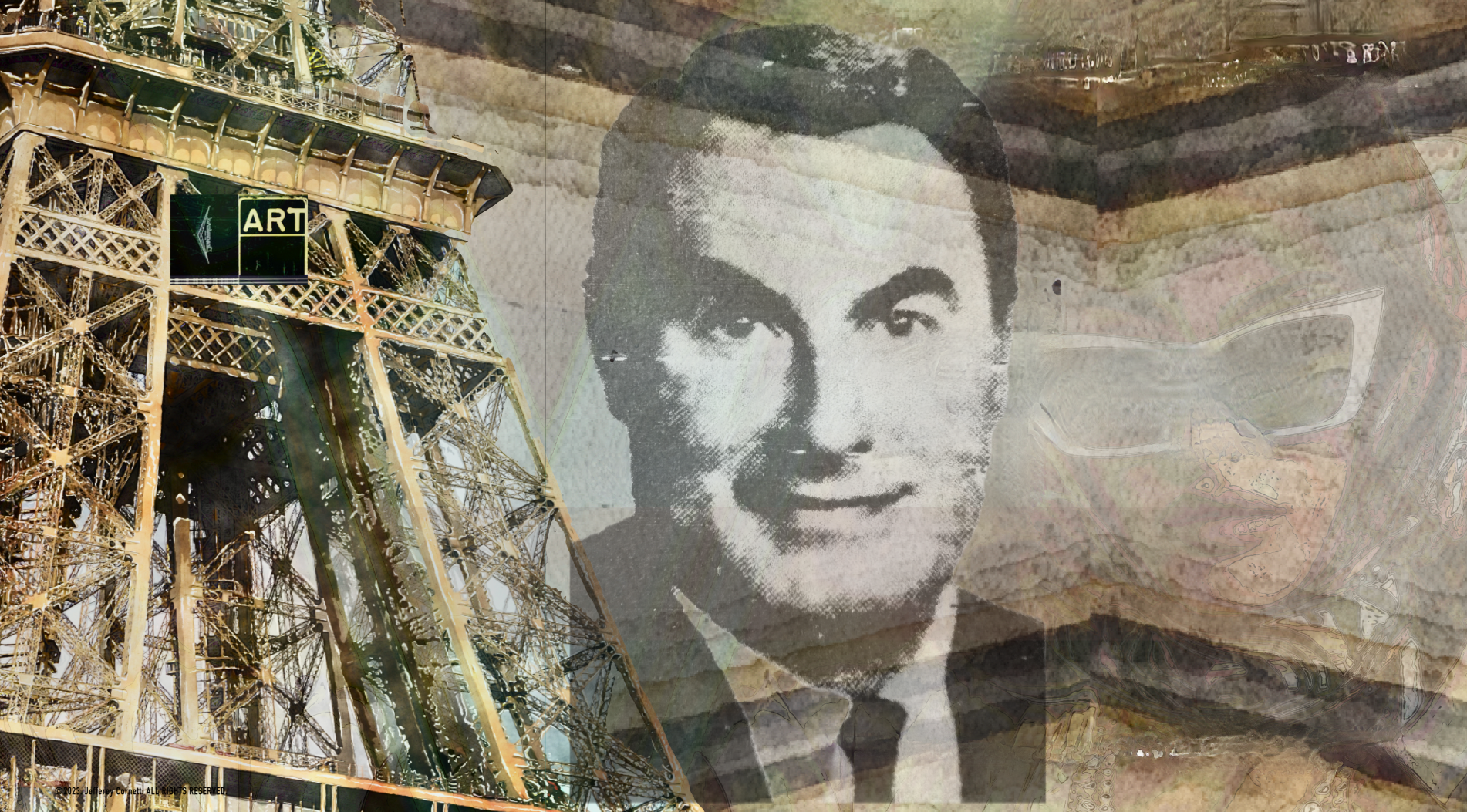
My father didn’t chase trends. He trusted instinct. He championed artists who moved him—and in doing so, he created a space on Oak Street where global modernism and Chicago’s creative spirit could exist side by side.
It was an unlikely path for the son of Eastern European immigrants raised on Chicago’s West Side. He worked his way through college and the University of Illinois Medical School, graduating in 1943, before enlisting in the Army. Deployed to France as an officer in the Medical Corps, he was later awarded four distinguished medals for his service.
While awaiting his redeployment back home, my father was stationed at a field hospital outside Paris, where he spent his rare free hours in museums. There, he developed a lasting connection to French Post-Impressionist art—one that would quietly shape the course of his life.
Back in Chicago, he built a successful medical practice. But while many of his colleagues spent their days off on the golf course, my father spent his in galleries. By the early 1960s, he was no longer just an observer—he had become part of the fabric of Chicago’s art world.
In June 1963, he opened Distelheim Galleries at 113 East Oak Street with a focus on the School of Paris and its associated movements as well as American contemporary painters and sculptors. From the beginning, the gallery reflected a global point of view—bringing together artists from overseas and Chicago in a shared dialogue.
Over time, the gallery became a meaningful force in the city’s evolving modern art scene. My father was invited into the Chicago Art Dealers Association, whose mission was to expand public access to serious, diverse work. Exhibitions at Distelheim Galleries were open, changing,
and wide-ranging, spanning styles, periods, and media.
Over time, the gallery became a meaningful force in the city’s evolving modern art scene. My father was invited into the Chicago Art Dealers Association, whose mission was to expand public access to serious, diverse work. Exhibitions at Distelheim Galleries were open, changing, and wide-ranging—spanning styles, periods, and media.
The roster reflected that breadth. International artists like Pierre Émile Lelong (France), Jesús Carlos de Vilallonga (Spain/Canada), Frederick Arthur Jessup (Australia), and Balázs Szabó (Hungary) were shown alongside American voices including Byron Burford, Henrietta Berk, Francis Cunningham, and James Barbee.
My father believed deeply in Chicago’s potential as a cultural center. In a critique he wrote for the North Shore Art League, he noted:
“If Chicago can be a leading medical, university, and industrial center, then the same ingredients are here for making the city a leading art center.”
He understood that space itself mattered—that art needed the right environment to be seen, considered, and lived with. He envisioned a gallery with presence: a thirty-foot frontage, two distinct exhibition spaces divided by a central wall, designed for both intimacy and scale.
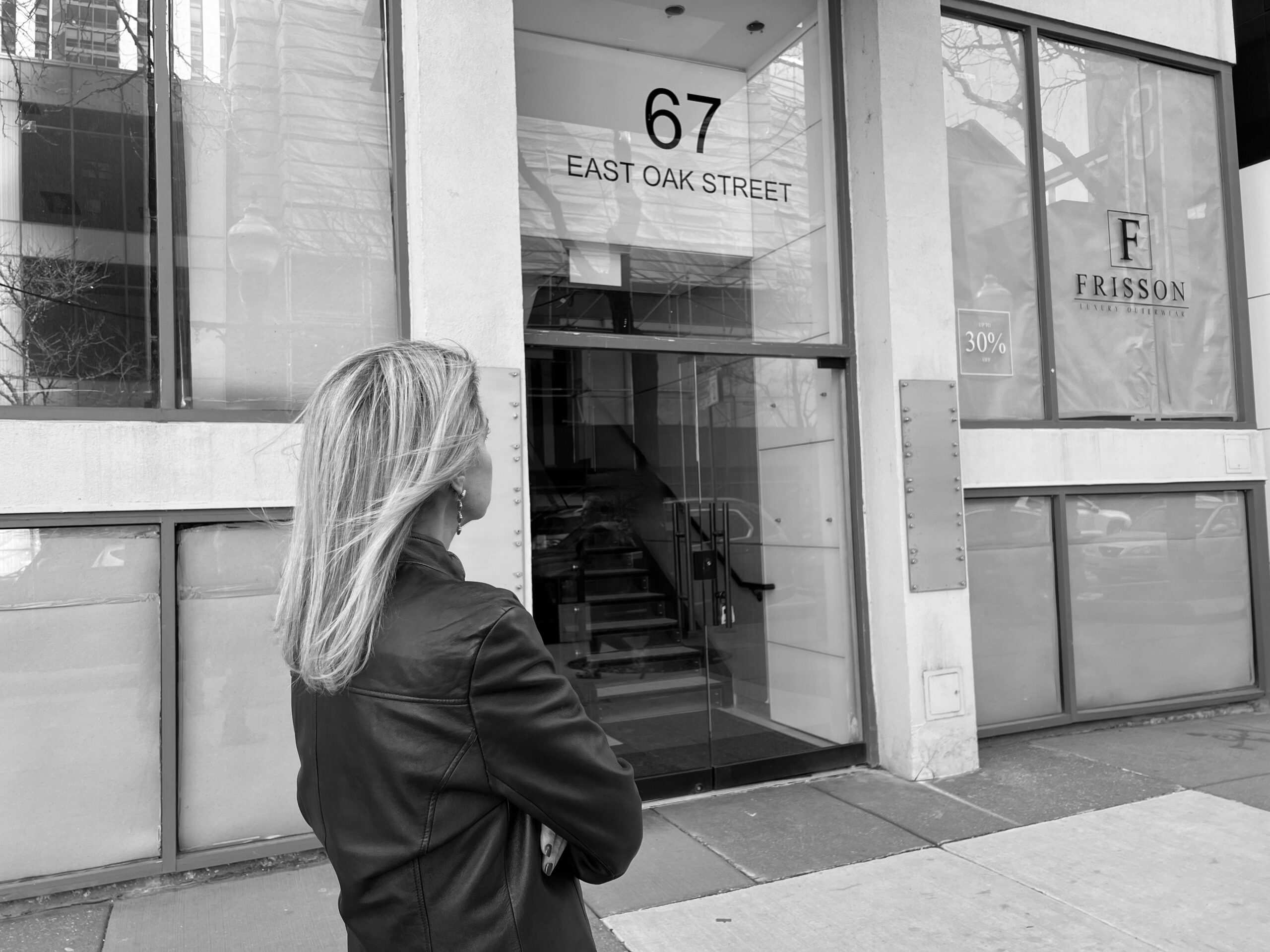
He realized that vision at 67 East Oak Street. The five-story midcentury structure, with its distinctive Hollywood Squares-like façade and generous proportions, became home not only to Distelheim Galleries but to a new generation of modern art galleries that would help define the corridor.
What had once been a boarding house evolved into a cultural destination—an address where art, conversation, and community intersected.
When A Legacy Nearly Lost Is Reimagined Out Of Love
My father passed away in 2018, just shy of his 100th birthday. By then, Distelheim Galleries had been closed for years, but it lived on in the memories of those who loved it and in the homes of dedicated collectors across the country.
The building at 67 East Oak Street remained a small but significant landmark, part of Chicago’s artistic zeitgeist and a reminder of Oak Street’s creative past. By 2025, however, only a few tenants remained. The architectural character of Oak Street had shifted toward a uniformly upscale, glass-fronted aesthetic, and the five-story relic of the building’s 20th-century heyday was slated for demolition.
Another small piece of Chicago history was being erased to make way for a new building more consistent with the glitzy structures around it. The sense of loss I felt realizing that 67 East Oak Street, as I knew it, would soon be gone was profound. But I also knew the story could not end there.
My father’s legacy was never meant to belong solely to the past.
So I stepped forward to carry his vision into a new era with the creation of The Distelheim Gallery™, a reimagined digital platform that honors the heritage my father began on Oak Street. What once lived within brick and mortar
now lives online: accessible, expansive, and able to reach audiences my father could never have imagined in the 1960s.
Today, The Distelheim Gallery features the work of multimedia artist and creative strategist Jefferey Cornett. The idea of preserving the soul of 67 East Oak Street emerged at the same time Jeff received a diagnosis of Stage IV prostate cancer, a moment that brought new clarity, urgency, and purpose to his own life. His current body of abstract work—dynamic, bold, and emotionally resonant—anchors the gallery’s debut.
My father believed that art should hold both beauty and emotional power. That belief guides us today. The Distelheim Gallery™ carries the heartbeat of his iconic gallery forward. The physical building may no longer stand, but the spirit of 67 East Oak Street remains very much alive.
And I am honored to carry it into the future.
We invite you to explore the archival timeline to learn more about Distelheim Galleries and how its legacy connects to The Distelheim Gallery.

The Building Is Becoming Silent. The Legacy Is Not.
The former home of Distelheim Galleries at 67 East Oak Street, photographed during the week of July 6, 2026.
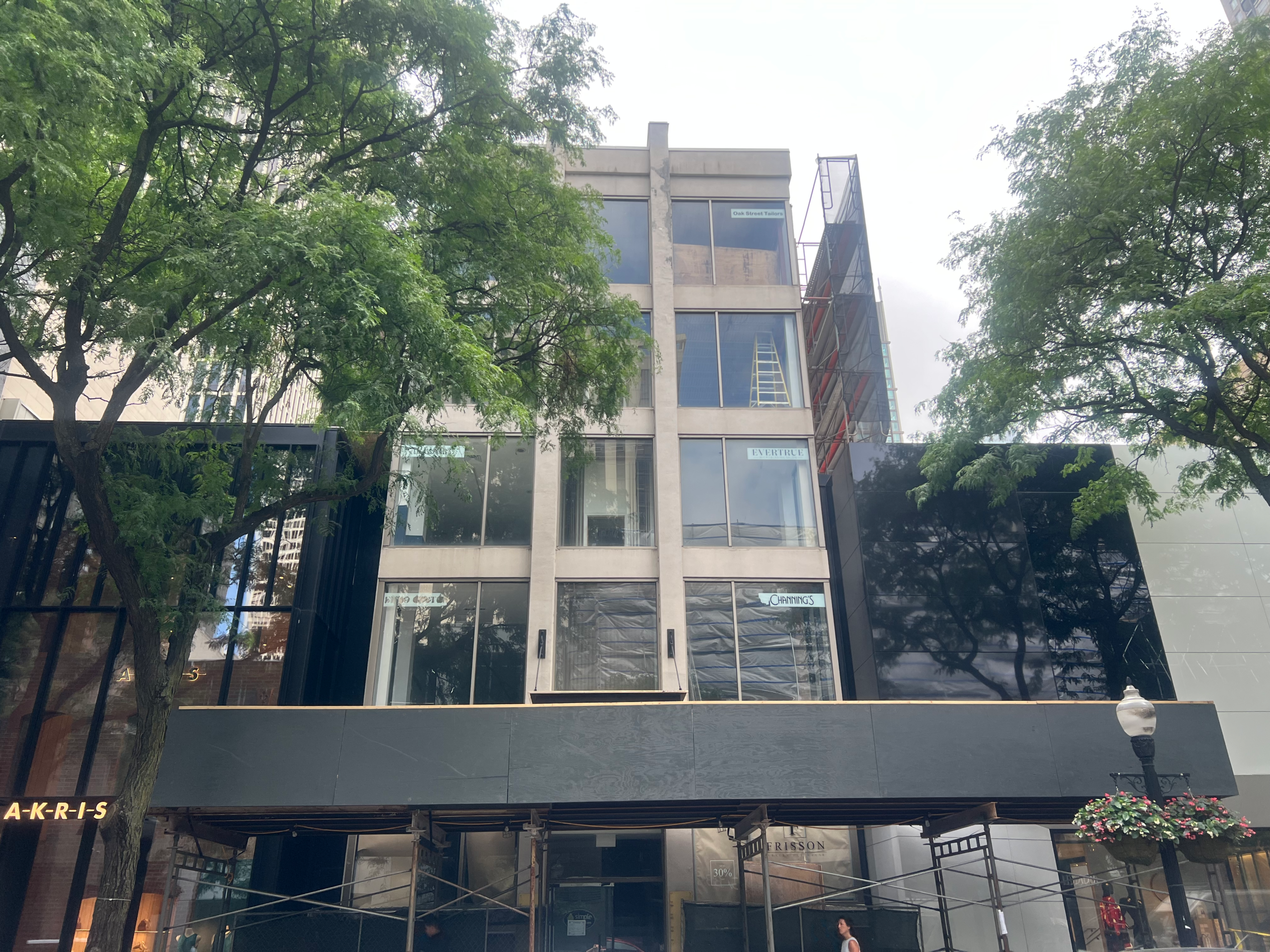
As of the week of July 6, 2026, the former home of Distelheim Galleries at 67 East Oak Street stands emptied and enclosed by construction scaffolding. Its once active windows are largely bare, with traces of former tenants still visible and a solitary ladder suggesting the work and uncertainty, inside.
Framed by the mature trees of Oak Street and neighboring luxury storefronts, the building appears suspended between its celebrated past and an unknown future.
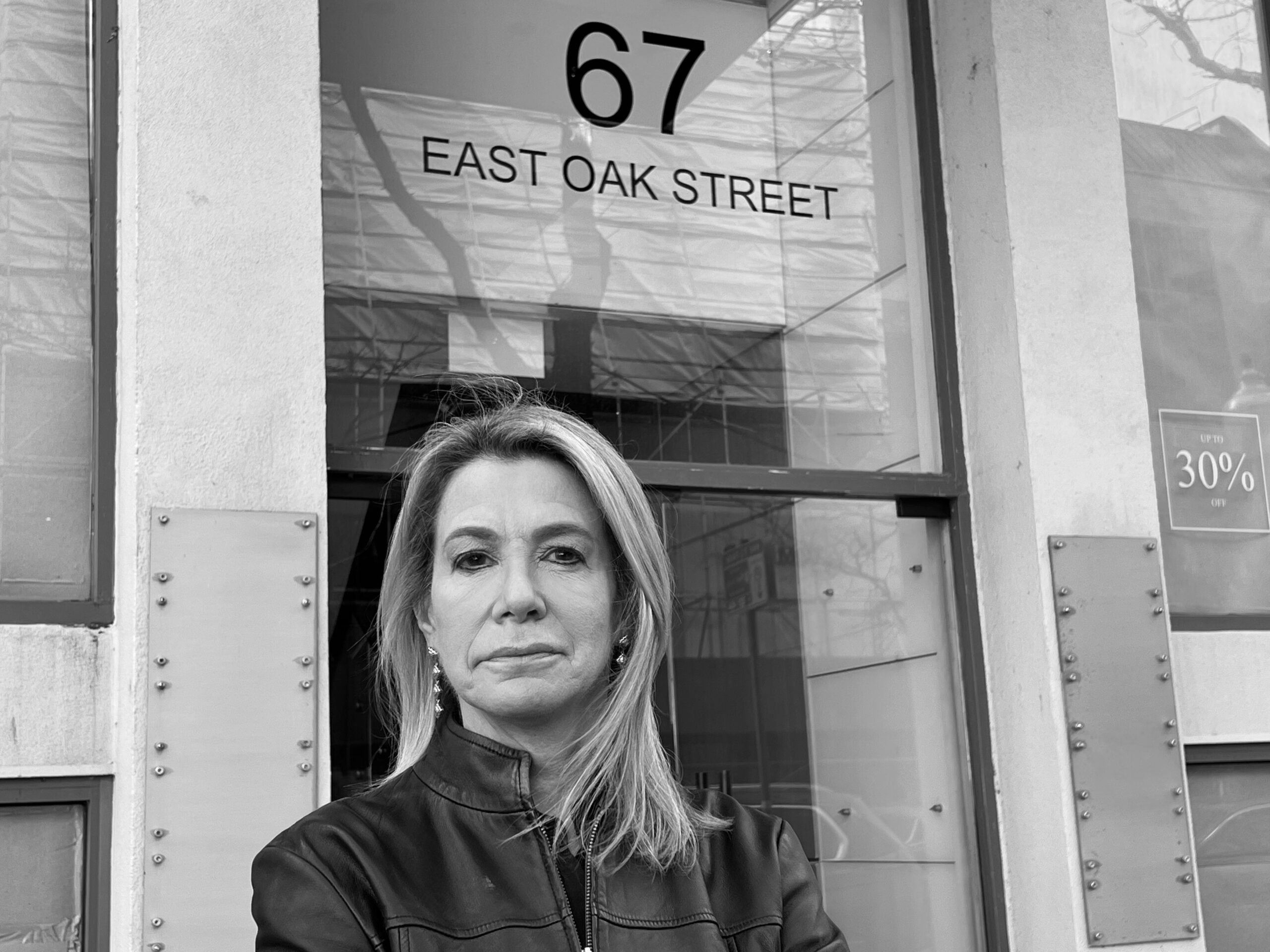
For Lisa Distelheim Barron , this is more than a photograph of a changing façade. It captures a place that helped shape Chicago’s cultural and artistic life, now stripped of the activity, relationships and creative energy that once animated it. The physical gallery may be silent, but its history and the legacy now being carried forward by The Distelheim Gallery™ remain very much alive.
The Art Of Surviving A Historic Change On Oak St
The Art Of Surviving A Historic Change On Oak St
Timeline of Key Distelheim Galleries Events and Exhibitions
June 7, 1963 : A Celebrated Beginning
Distelheim Galleries opened its doors in Chicago with a champagne reception that signaled not just the arrival of a new gallery, but the emergence of a distinctive curatorial voice, one committed to bringing international modernism into dialogue with American creativity.
July 1963 : Introducing Global Perspectives
Within weeks of opening, the gallery hosted the first U.S. exhibition of Paris based American artist Roselle Davenport, whose Continental Expressionist work had already gained recognition across Europe. This early exhibition set the tone for the gallery’s international outlook.
Mid 1960s : A Bridge to European Modernism
By the mid-1960s, Distelheim Galleries had established itself as a conduit for European art, presenting works by notable French artists including Pierre Lelong, Louis Fabien, Claude Venard, Gérard Passet, and Albert Vagh Weinmann. These exhibitions expanded Chicago’s exposure to contemporary movements shaping the European art scene.
Championing American Talent
Alongside its international programming, the gallery remained deeply committed to American artists.
Exhibitions featured:
-
-
-
-
-
- Byron Burford, a figurative painter influenced by Grant Wood and known for his fascination with circus life
- Rice Pereira, a pioneering figure in American modernism
- Lee Weiss and Charles Greenholdt, both celebrated for their innovative watercolor techniques
- Sculptor Howard Demyer
- Painters Valfred Thelin and Edwin Dickerson, both represented at the Butler Institute of American Art
- Chicago based artist Chuck Wood, reinforcing the gallery’s local engagement
-
-
-
-
Curated Exhibitions and Cultural Programming
The gallery curated thematic exhibitions such as The Young Italians and Art of Today (France), alongside seasonal art festivals featuring rotating works. A robust lecture series further positioned Distelheim Galleries as a center for intellectual and cultural engagement, fostering dialogue around contemporary European and American art.
1966: Expansion to New York
Building on its success, Distelheim Galleries established an affiliated New York presence with the Emile Walter Gallery on East 57th Street, extending its influence into one of the world’s most important art markets.
May 1967 : Art and Advocacy
The gallery demonstrated a strong commitment to community engagement by organizing a preview exhibition with the Women’s Board of the Chicago Multiple Sclerosis Society. This remarkable event featured works by 150 artists with disabilities trained through the Chicago Homebound Project, underscoring the gallery’s belief in art as both cultural and social force.
Late 1960s : Expanding Artistic Range
As its reputation grew, the gallery broadened its roster to include:
- Prints by David Driesbach
- Coastal landscapes by James Barbee
- Bronze sculptures by Georges Gach
- Oil paintings by Richard Beard
1970: Establishing a Legacy Address
In 1970, Distelheim Galleries relocated to the top floor of a newly renovated building at 67 East Oak Street. Personally designed by Dr. Irving Distelheim, the space reflected a vision of what a gallery could be—architecturally refined, purpose-built, and deeply attuned to the presentation of art.
1970s: Continued Innovation and Influence
Throughout the 1970s, the gallery remained a dynamic force, presenting a wide spectrum of work, including:
- Surrealist compositions by Polish artist Willy Mucha
- Intimate European scenes by Huntley Baldwin
- Paintings by Henrietta Berk, associated with the Bay Area Figurative Movement
- Portraits by Jan de Ruth, known for capturing prominent public figures including Pat Nixon and Ethel Kennedy
- Works by Antonio Dias, a leading voice in Brazil’s Tropicalia movement
- Sculptural works by artist and architect Larry Bell
- Figurative paintings by Francis Cunningham, later co-founder of the New York Academy of Art
Prominent Artists Shown At Distelheim Galleries
Pierre Émile Lelong (1908–1984)
Nouvelle École de Paris — Neo-Impressionist


Lelong was a neo-Impressionist painter, whose postwar art was firmly entrenched in the Nouvelle Ecole de Paris (School of Paris) He was renowned for his vibrant depictions of beach scenes, figures, marine life, and southern French landscapes. In 1972, he won the Grand
Prix des Peintres Témoins de Leur Temps (Grand Prize of Painters as Witnesses of Their Time), a prestigious French art award associated with an annual Salon held in Paris from 1951 to 1982.
Byron Burford (1920–2011)
Burford was a figurative artist from Mississippi who studied under Grant Wood of “American Gothic” fame at the University of Iowa, where he later taught for nearly four decades. He also became a multimedia artist with a strong following, especially in the Midwest, best known for depicting circus life. Among his many works are whip-cracking lion tamers, trapeze artists, and ladies bedecked with feathers riding on elephants. His works are in the collections of the San Francisco Museum of Modern Art, the Walker Art Center in Minneapolis, the Nelson-Atkins Museum of Art in Kansas City, Mo., and the University of Iowa Art Gallery.
Frederick Arthur Jessup (1920–2007)
Australia/France
Jessup was an Australian artist who moved to France in 1948. He was known for a distinctive modernist still-life style, often featuring vibrant floral, botanical, and decorative subjects. His work, typically oil on canvas, is characterized by bold colors, structured compositions, and a textured, stylized interpretation of everyday objects and flowers. His art is held in collections including the National Gallery of Australia.


Henrietta Berk (1919–1990)
Bay Area Figurative Movement
Bold color, thick impasto, and assertive form define Henrietta Berk’s expressive canvases. As part of the Bay Area Figurative Movement, she helped push American painting toward a new, vibrant emotionalism. Distelheim Galleries brought her work to Chicago collectors at a time when California modernism was rising, making her a key bridge between West Coast innovation and Midwest audiences.


Jesús Carlos de Vilallonga (1927–2018)
Spanish-Canadian Figurative Modernist
Vilallonga’s paintings inhabit a dreamlike realm of elongated figures, jewel-toned palettes, and symbolic interior worlds. His egg-tempera works—meticulous, luminous, and deeply poetic—brought Mediterranean elegance and emotional depth to Distelheim Galleries during the 1960s–70s. He remains one of the gallery’s most visually distinctive international voices.


Balazs Szabo (1932–2022)
Hungarian-American Surrealist / “Fantastic Realist”
Balazs Szabo’s early U.S. breakthrough came through a one-man show at Distelheim Galleries. His hyper-detailed, surreal compositions blend fantasy, philosophy, and personal mythology. His work represents the gallery’s daring embrace of Eastern European avant-garde imagination during a time when American audiences had limited exposure to such perspectives.


Frank Elliott Gunter (1924–2013)
American Landscape & Streetscape Painter
Gunter’s work captured the architectural charm of American and European towns with crisp detail and atmospheric clarity. His landscapes and street scenes offered a grounded counterpoint to the gallery’s more abstract and surreal voices, giving Oak Street a quiet but resonant realism.


Francis Cunningham (1931- )
American Landscape & Streetscape Painter
Known for his rigorous approach to anatomy, gesture, and the subtleties of natural light, Francis Cunningham helped rejuvenate classical realism in the late 20th century. His 1970 solo exhibition at Distelheim Galleries placed his thoughtful realism alongside the gallery’s international modernist program.


.
Our New Journey Is Beginning
As we look toward 2026 and beyond, The Distelheim Gallery™ is intentionally expanding its focus around abstract art in dialogue with modern art, reflecting both our legacy and the evolving language of contemporary expression.
Abstract art has deep roots in Chicago’s Oak Street corridor, a quiet but powerful catalyst in shaping the city’s artistic identity. By embracing this tradition, we are not simply honoring the past of the original Distelheim Galleries, which championed modernism and cultivated collectors who lived with their art. We are evolving it.
Abstract work offers a universal emotional resonance that transcends trends and borders, creating a natural bridge between heritage and innovation. This focus positions The Distelheim Gallery™ to build a distinct and authentic brand—one that elevates abstraction as both a historical cornerstone and a living force for creative awareness, collector engagement, and cultural conversation.
The Distelheim Gallery™ is not just another art gallery.
It is the reawakening of a legacy that began on Oak Street in Chicago, where modern art found a home through the vision of Dr. Irving Distelheim, a collector and gallery founder who believed art should be lived with, not merely looked at.
Today, that vision is being carried forward by his daughter, Lisa Distelheim Barron, and her partner, artist and creative strategist Jefferey Cornett. Together, they are bringing the gallery into the 21st century with a digital-first, collector-conscious approach rooted in legacy, access, and storytelling.
Unlike many traditional galleries that function as exclusive gatekeepers, The Distelheim Gallery™ is designed to reduce the barriers between artist, artwork, and audience.
We combine the warmth and intimacy of a legacy art space with the reach and accessibility of a modern digital platform, allowing people to engage with art wherever they are.
Our collections, including the vibrant Orange & Black Collection and the moody Blue Room Collection, are offered in multiple formats—from museum-quality originals and limited editions to beautifully boxed tabletop sets, note cards, and wearable art. This layered approach invites everyone from first-time buyers to established collectors to participate at their own level of comfort, interest, and investment.
For new buyers, we provide approachable entry points that make collecting feel personal and exciting rather than intimidating. Through storytelling, education, and transparent pricing, we build trust and context around each work.
Every piece carries a story: the history, the inspiration, the process, and the human meaning behind it. In this way, an art purchase becomes more than a transaction. It becomes an emotional connection.
For collectors, our model embraces rarity, provenance, and long-term meaning. Our editions are limited and intentional, preserving exclusivity while allowing collectors to diversify their acquisitions. We are not interested in following trends. We are building enduring narratives that give collections weight, depth, and lasting relevance.
The Distelheim Gallery™ honors its Oak Street roots by upholding the belief that art connects people. But we pair that belief with new tools: digital exhibitions, storytelling, pop-up experiences, salon-style presentations, and partnerships that bring art into unexpected places.
Our approach allows us to build a community, not just a client list.
This is not about art that sits quietly on a wall.
It is about art that lives, breathes, travels, and inspires.
For Those Who See Art as More Than Decoration
Whether someone is discovering their first piece or adding to a carefully curated collection, The Distelheim Gallery™ offers a way to connect with art that is as human and dynamic as the work itself.
It is a gallery built for the curious, the passionate, and the visionary—those who understand that collecting art is not only about owning objects, but about participating in a story that continues to unfold.