

Vision for the 2026 Distelheim Gallery Collection
A Year of Renewal, Revelation, and Return to Essence
The 2026 Distelheim Gallery Collection is envisioned as a defining moment—a year in which legacy, innovation, and artistic truth converge to create a body of work that both honors where we come from and boldly declares where we are going.
In 2026, Distelheim Gallery will deepen its identity as a modern gallery with a storied past and a visionary present. This year’s collection will reflect the spirit of transformation that has guided our work: a shift toward clarity, authenticity, and artistic integrity. It will also reflect the personal journey of its artist, whose life and work now stand more openly in conversation with the gallery’s origins and with the profound human experiences that shape creativity.
THE OPENING CHAPTER
The White Room Works (January 2026)
The 2026 Collection begins with the January introduction of The White Room Works, a series defined by restraint, purity, and the quiet power of nuance.
The White Room Works serve as both an artistic reset and a conceptual gateway. In a world that speaks in noise, this collection speaks in whisper. Through layered whites, tonal shifts, and textured minimalism, these works explore the spaces between silence and expression, simplicity and complexity, emptiness and meaning. Each piece invites viewers to step into a room cleared of distraction—a room where shape, light, memory, and emotion find new ways to reveal themselves.
This collection symbolizes rebirth: a deliberate clearing of space so that new color, story, and movement can emerge throughout the year’s remaining releases.
A Year in Four Movements
Following The White Room Works, the 2026 Distelheim Gallery Collection will unfold in four thematic arcs, each exploring a different dimension of abstraction, memory, and the emotional landscapes that define human experience:
1. Rhythm & Resonance
Works inspired by the undercurrents of music, breath, heartbeat, and lived experience. Pieces that vibrate with color and echo with the artist’s decades-long relationship to sound, performance, and narrative.
2. The American Spirit Reimagined
New contributions to the acclaimed American Spirit Collection that reflect the tension and beauty found in today’s cultural conversation—heritage, reinvention, identity, resilience.
3. Chromatic Mythologies
A return to boldness, exploring how color becomes story and how abstract forms can hold the mythology of personal and collective memory.
4. Legacy, Light & Lineage
A fall–winter culmination of works that honor the lineage of Distelheim Galleries—its original Oak Street roots, its founder’s global vision, and the emotional threads that bind father to daughter, and now to a new era shaped by life partnership, shared purpose, and a commitment to restoring legacy through modern art.

More From The Private Collection

Tides
Lorem ipsum dolor sit amet, consectetur adipiscing elit. Donec sed finibus nisi, sed dictum eros. Nisl massa, ultrices vitae ornare sit amet, ultricies eget orci. Sed vitae nulla et justo pellentesque

Abstracted Modern Man

American Spirit Collection
Aliquet nisl. Nulla tempor mauris sed pretium egestas. Ut mi lacus, tincidunt ac quam quis, ultricies laoreet purus. Donec tincidunt scelerisque lacus, vel convallis augue interdum ac. Etiam eget
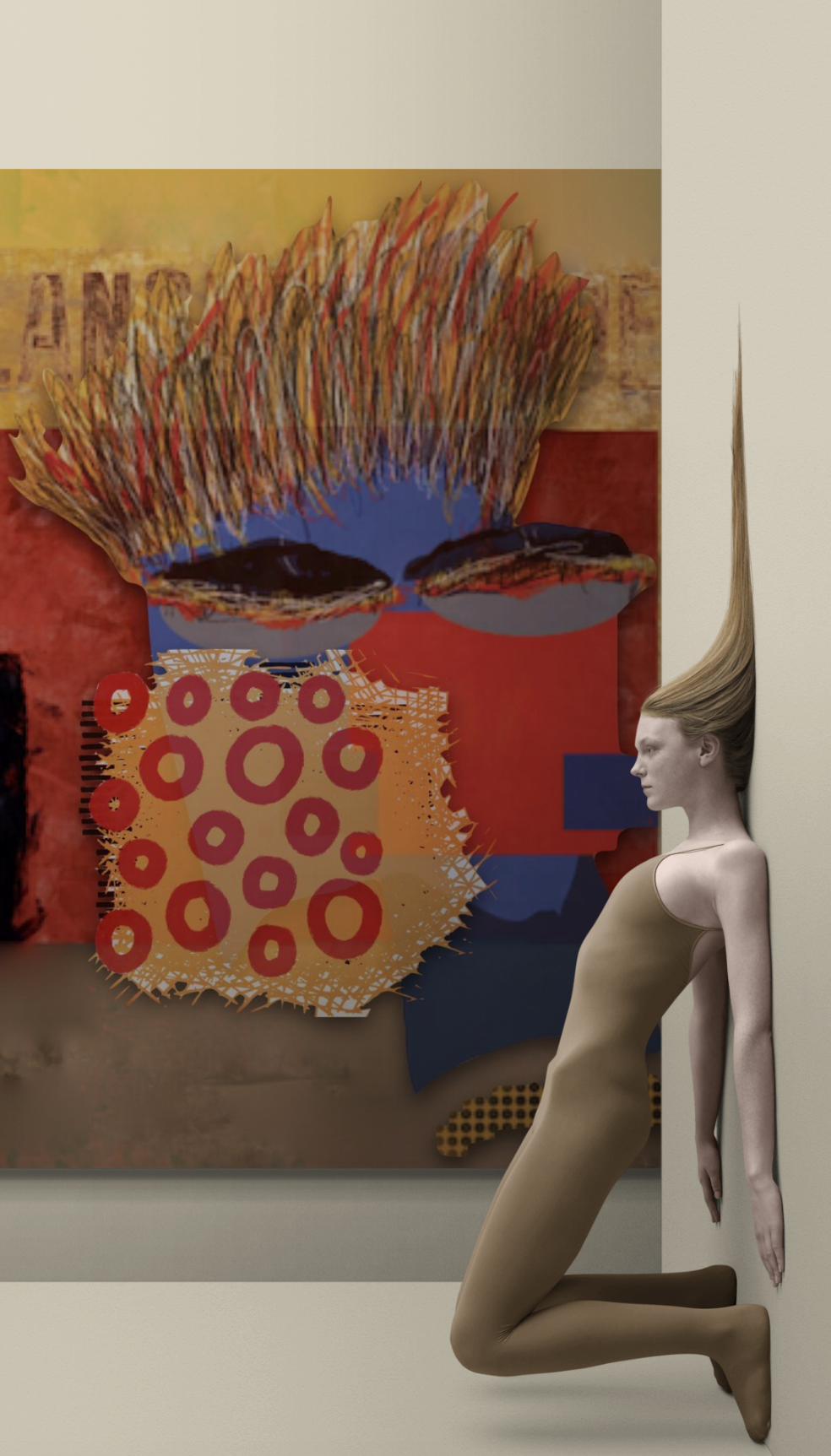
NuIANCes

“Hey Bud” (c. 1995)
Artist: Jefferey Cornett
Medium: Mixed Media (Analog Photography + Early Digital Texturing)
Year: Mid–1990s
“Hey Bud” is a vivid, nostalgically charged early work from Jefferey Cornett’s mid-1990s period, created at a time when he was blending traditional photographic techniques with experimental digital texturing—long before such hybrid approaches became common.
The image features a Dalmatian perched atop a classic Budweiser beer wagon, gazing outward with the alert, noble posture of the historic “firehouse dog.” Cornett captures the animal y.
mid-moment: proud, aware, and slightly curious, almost as if acknowledging the viewer with a friendly greeting—hence the title.
The work’s signature aesthetic comes from Cornett’s early technique of applying a mosaic-grain digital texture over a photographic base. This created a warm, painterly atmosphere, softening the background into tonal gradients while allowing the crisp white-and-black spotted coat of the dog to stand out like a carved figure. The bright orange Brewmaster-style wagon contrasts beautifully with the soft winter sky, anchoring the composition with a classic Americana sensibility.
“Hey Bud” is part nostalgia, part character study. It belongs to the artist’s evolving storytelling period—long before his major abstract collections—yet already demonstrates a key trait of Cornett’s oeuvre: emotionally intelligent realism. This Dalmatian is not merely a mascot. In Cornett’s hands, it has personality, presence, and a quiet dignity.
Early Works
Aliquet nisl. Nulla tempor mauris sed pretium egestas. Ut mi lacus, tincidunt ac quam quis, ultricies laoreet purus. Donec tincidunt scelerisque lacus, vel convallis augue interdum ac. Etiam eget

“Oink”
Artist: Jefferey Cornett
Medium: Mixed Media (Digital + Traditional Visual Treatments)
Year: Early Work (c. 2000s)
Oink is one of Jefferey Cornett’s formative early pieces—a work that predates the large-format abstractions for which he would later be known, yet clearly foreshadows the emotional depth and sculptural sensibility present throughout his mature oeuvre.
Rendered in warm umbers, claylike oranges, and deep siennas, the piece centers on the softened, almost statuary form of a pig in repose. The
creature’s body is simplified into smooth planes and subtle curves, creating a visual language closer to sculpted stone than to photographic realism. Cornett overlays this with a mosaic-like texture—small, faceted fragments that refract light and break the surface into shifting tonal fields. This treatment gives the work a tactile density, as if the image itself contains weight and temperature.
Though the subject is whimsical by nature, Cornett approaches it with seriousness and tenderness. The pig’s closed eye and faintly smiling mouth evoke calm, contentment, and
simple being. Rather than making the creature humorous or sentimental, Cornett elevates it—transforming an everyday animal into an emblem of tranquility and quiet dignity.
In this early work, we see the seeds of themes that would define Cornett’s later artistic identity:
-
The humanization of non-human subjects
-
The sculptural treatment of light and form
-
The warm, grounding palette that invites intimate emotional connection
-
A fusion of realism with abstraction and texture-based storytelling
Oink stands as a charming yet remarkably sophisticated precursor to the artist’s current approach to narrative abstraction.
Your content goes here. Edit or remove this text inline or in the module Content settings. You can also style every aspect of this content in the module Design settings and even apply custom CSS to this text in the module Advanced settings.

Your content goes here. Edit or remove this text inline or in the module Content settings. You can also style every aspect of this content in the module Design settings and even apply custom CSS to this text in the module Advanced settings.
Your content goes here. Edit or remove this text inline or in the module Content settings. You can also style every aspect of this content in the module Design settings and even apply custom CSS to this text in the module Advanced settings.

Description — Eternal Vibrato (2018)
Artist: Jefferey Cornett
Collection: The Art of Music Collection
Medium: Digital Mixed Media (Textural Abstraction)
Year: 2018
Eternal Vibrato is one of the most atmospheric and emotionally resonant works in Jefferey Cornett’s Art of Music Collection. Painted in 2018, the piece transforms an iconic electric guitar—its white body weathered, its neck glowing like embers—into a haunting symbol of sound, memory, and artistic devotion.
Set against a deep, shadowed background, the guitar seems to emerge from darkness rather than sit upon it. Cornett uses layered strokes of muted black, violet, and indigo to create a sense of stage-light haze, as if the instrument is
suspended in the final seconds after a live performance—the moment when the last note still vibrates in the air.
The body of the guitar is rendered with soft, ghostlike strokes, suggesting age, history, and the imprint of countless hands. Highlights of blue, lavender, and rose flicker across the surface, giving the instrument a spectral quality. In contrast, the neck is ablaze with warm oranges and reds—evoking movement, heat, and the rhythmic pulse of string vibrations.
Cornett’s visual language here captures music not through representation, but through sensation. This is not just a guitar—it is a memory, an echo, a final sustained chord. The work reflects Cornett’s own lived connection to music, decades of songwriting and performing distilled into quiet abstraction.
Eternal Vibrato stands as both an homage and an elegy to the instrument that shaped his creative foundation.
The Art of Music
By Jefferey Cornett
Music has always been a driving force in Jefferey Cornett’s creative life, and The Art of Music Collection represents the intersection of his two lifelong disciplines: visual art and songwriting. Each piece in this series is built on rhythm—visual rhythms, emotional rhythms, and the textures of sound translated into line, tone, and movement.
Cornett approaches musicians not through traditional portraiture, but by capturing the energy surrounding them: the scribbled spontaneity of rehearsal rooms, the chaotic unity of live performance, the long hair, grit, and charisma that defined generations of rock, folk, and blues artists. These works are emotional maps—portraits of presence rather than likeness.
Throughout the collection, Cornett uses ink, graphite, and digitally enhanced textures to create compositions that feel urgent, alive, and deeply musical. Whether depicting a single artist or an entire ensemble, the series explores the poetic truth that art—like music—is not what you see, but what you feel.


Where Sound Becomes Line
Jefferey Cornett’s Personal Journey from Songwriting to Visual Rhythm
Before he was known for large-format abstractions and gallery work, Jefferey Cornett was a songwriter, performer, and producer—living inside the emotional machinery of music. Decades on stage, in studios, and on tour shaped his understanding of rhythm, breath, phrasing, and the delicate balance between structure and improvisation.
Those experiences didn’t disappear—they migrated.
In The Art of Music Collection, Cornett revisits those years not through nostalgia, but translation. The frenetic scribbling reflects the way a guitar riff sounds when it spills out unfiltered. The layered ink resembles the messy
brilliance of rehearsals. The silhouettes echo bandmates locked into shared timing. And the absence of eyes or detailed features mirrors a truth Cornett learned long ago: in a great band, ego dissolves and the music becomes the identity.
The Four Chords embodies this philosophy. The figures don’t need faces; they need presence. They need motion. They need to feel like they’re about to hit the next note.
Cornett’s art is, in many ways, music without sound—and this collection is where those two worlds finally meet.


Your content goes here. Edit or remove this text inline or in the module Content settings. You can also style every aspect of this content in the module Design settings and even apply custom CSS to this text in the module Advanced settings.
Your content goes here. Edit or remove this text inline or in the module Content settings. You can also style every aspect of this content in the module Design settings and even apply custom CSS to this text in the module Advanced settings.

Your content goes here. Edit or remove this text inline or in the module Content settings. You can also style every aspect of this content in the module Design settings and even apply custom CSS to this text in the module Advanced settings.

Your content goes here. Edit or remove this text inline or in the module Content settings. You can also style every aspect of this content in the module Design settings and even apply custom CSS to this text in the module Advanced settings.


The Four Chords
Jefferey Cornett
Ink on Paper (2015)
The Art of Music Collection
In The Four Chords, Jefferey Cornett renders four musicians through frenetic, looping ink lines that pulse like sound waves. The figures emerge from dense scribbles—raw, expressive, and emotionally charged—capturing the improvisational spirit of a band mid-performance. Their identities are intentionally obscured, shifting the focus from individual likeness to shared rhythm. Created in 2015 as part of The Art of Music Collection, the work reflects Cornett’s belief that visual art and music share a common language: harmony, tension, movement, and release.
CONNECT
Location
Chicago, IL
Phone
917.655.7292
info@thedistelheimgallery.com